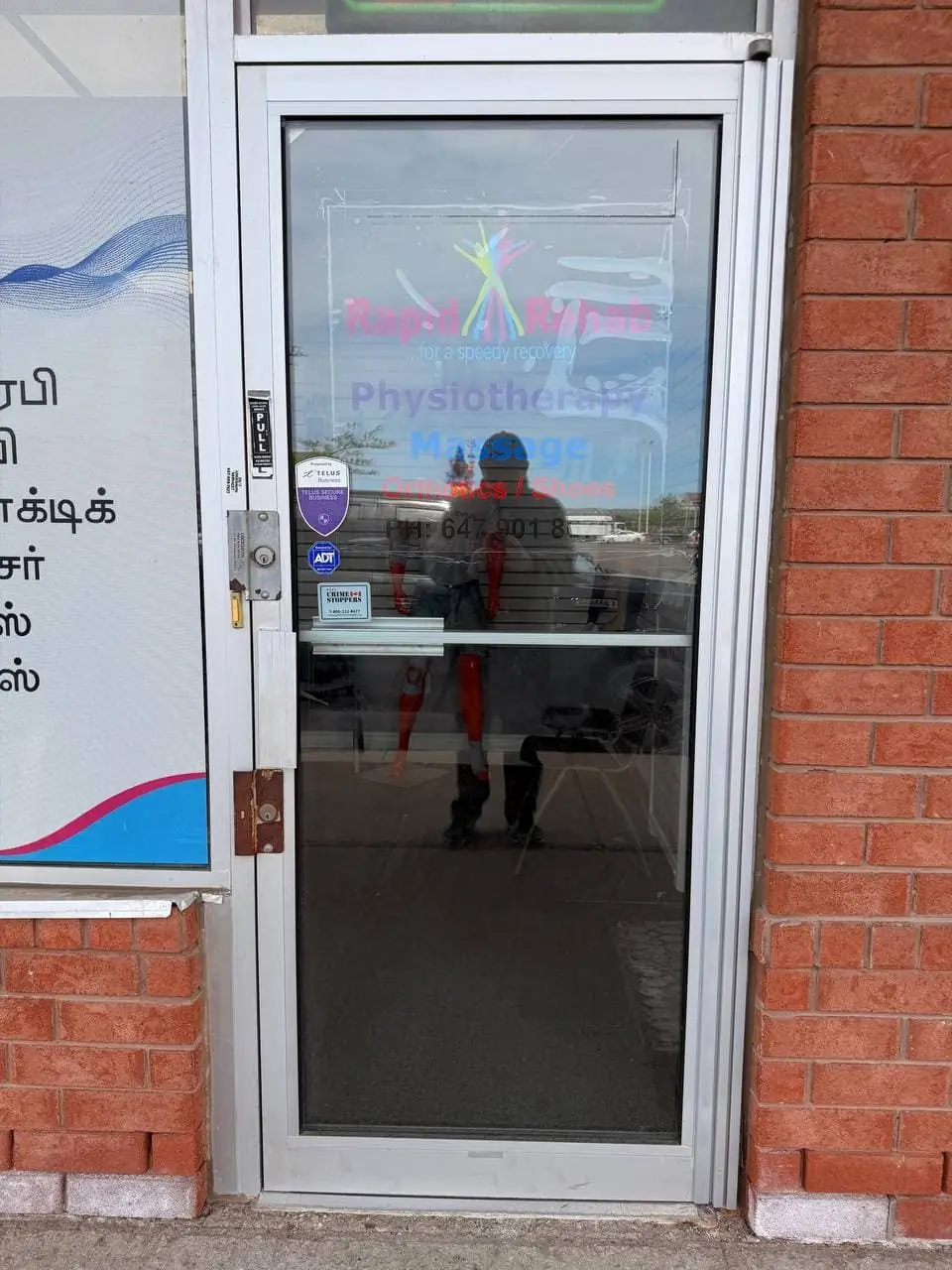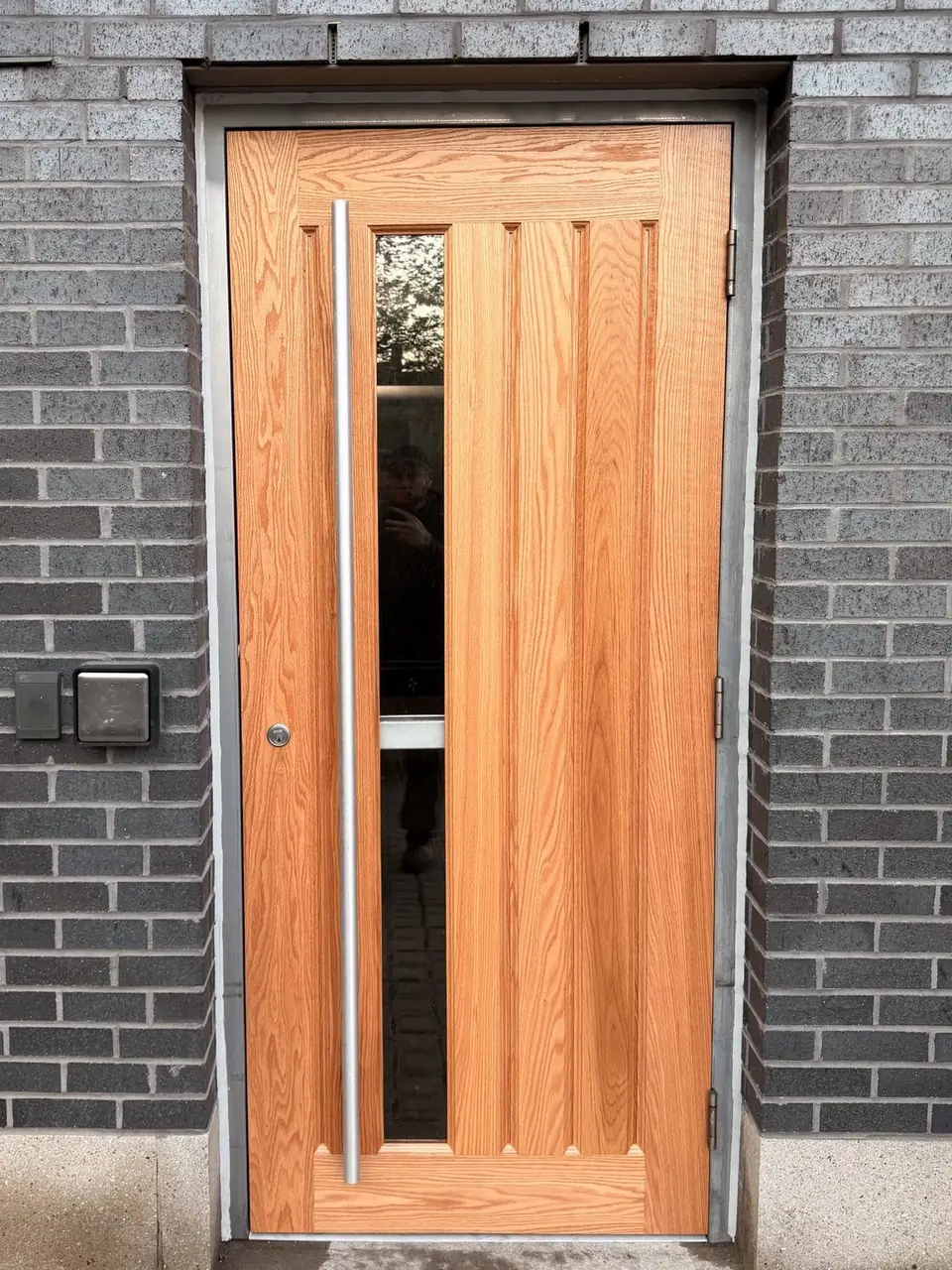
In short. The usual commercial door problems are closers that slam or don't latch, sagging hinges, locks that no longer line up and damaged glass. DoorWin Services repairs them on site across Toronto and the GTA, 24/7; call (416) 302-3559.
A commercial door that slams, drags or will not lock needs a diagnosis of the whole opening. The visible symptom may come from the closer, hinges, pivots, latch, frame or glass. We check how those parts work together before recommending adjustment, a replacement component or a new door.
This guide helps you describe a problem at a shop, office or service entrance in Toronto and the GTA. The project examples show different scopes of work, including parts repaired on a retained door and a complete new door assembly. For an assessment at your property, see our commercial door assessment and repair service.
1. The door slams shut or closes too slowly
Notice whether the door moves quickly through its whole swing, slows down but stops before the latch, or rubs before it reaches the frame. These are different observations. A door closer controls closing movement, but it cannot correct a door that binds against its frame.
- What we inspect: the closer body and arm, visible leakage, hinge or pivot resistance, the swing path and contact at the latch.
- How we choose the repair: adjustment may be suitable when the closer is serviceable and the door moves freely. A leaking or damaged closer may need a compatible replacement. Binding or alignment faults need attention as well.
- What to tell us: whether the behaviour started suddenly, whether wind changes it, and whether the door still latches after normal use.
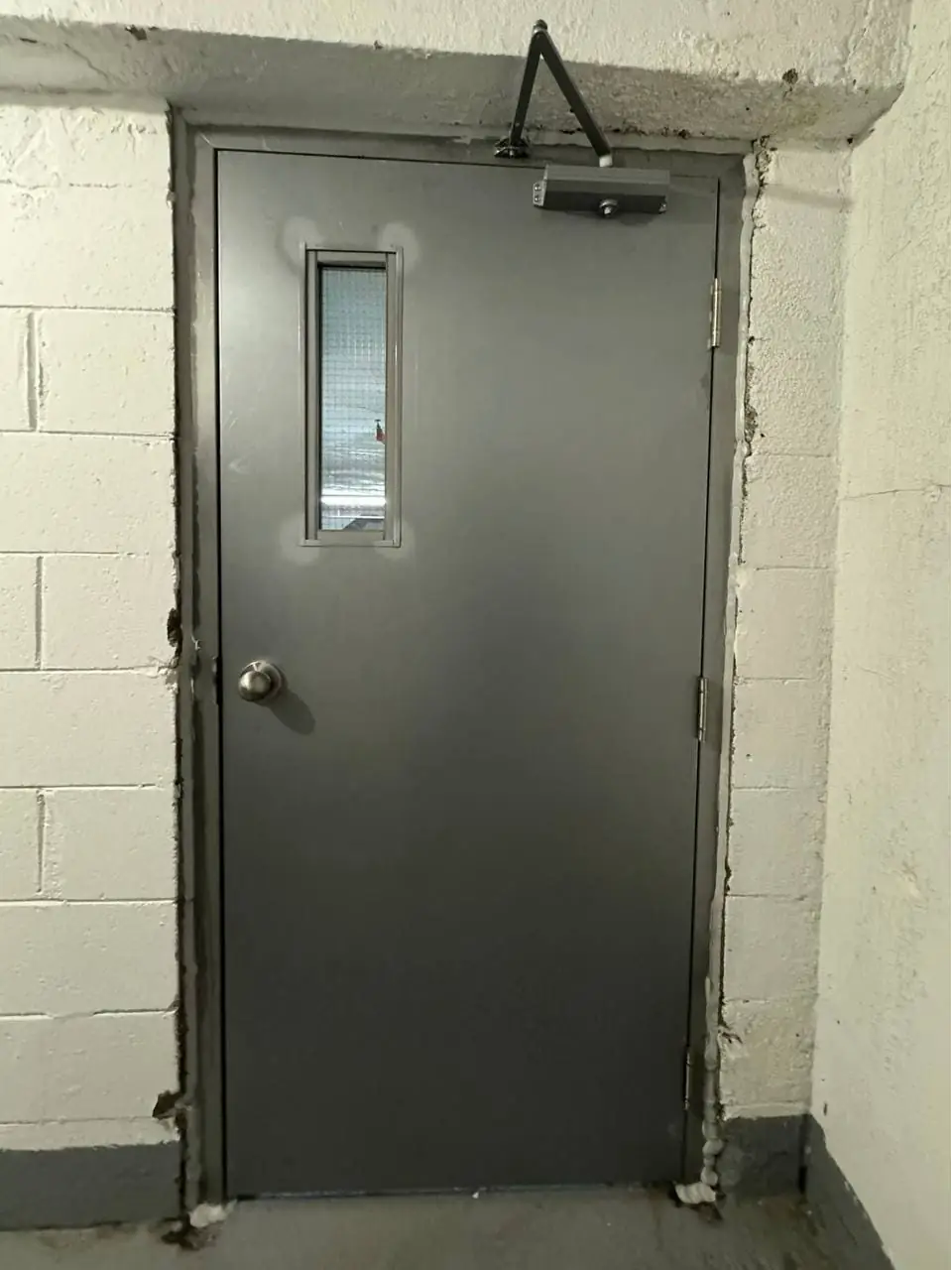
Our Clarington double steel door project shows two surface closers, one per leaf. The doors open manually; the closers control their return. This was an installation of a steel door pair with closing hardware, not powered automatic opening. It is a useful example of why the hardware name and the work scope matter.
2. The door drags on the threshold
A scraping corner, uneven gap or latch that has shifted can point to a support or alignment problem. An obstruction at the threshold, a damaged sweep or movement in the frame can produce similar symptoms. We identify the contact point before choosing a hinge, pivot or alignment repair.
On a Toronto commercial entrance that was becoming harder to close, we removed worn hinge hardware, installed a full-length continuous geared hinge and realigned the existing door. Opening and closing were checked afterward. That specific door needed new support hardware; the same solution is not necessary for every scraping door.
Our sagging and dragging door service covers the assessment. The separate guide to door alignment and continuous hinges compares new hinge installations with service to an existing hinge.
3. The lock or panic bar sticks
First separate the symptom: does the key resist turning, does the latch miss its strike, or does the interior exit device fail to release normally? A door can have a working lock and still fail to secure because its position has changed. Replacing the cylinder alone would not correct that alignment problem.
We inspect the door position, latch-to-strike contact and the relevant locking or exit hardware. Our locksmith and hardware services cover repairable components and compatible replacement options. If people cannot leave through the opening normally, report that immediately and arrange urgent professional attention. Do not add a temporary lock or fastening that interferes with exit use.
In Brock Township, we fitted a push bar to an existing metal exit door. The door stayed in place. The job included the interior exit device, the exterior lever and locking relationship, and an exit-operation check. This was a hardware installation, not a complete door replacement. See panic bar and exit-device services for that type of work.
4. Drafts appear around the closed door
Before ordering a new sweep, note where air is coming through: along the bottom, at the meeting edge of a pair, or around the frame. Worn seals are one possibility; an uneven door fit or a door that does not fully close can also leave a gap.
We check the fit and closing action, then inspect the weatherstripping, sweep and threshold. The repair may involve alignment, compatible seals or both. Seals need to close the identified gaps without making the door bind. Our weatherstripping and draft-control service explains those options. A photograph of the gap is useful; an energy bill alone does not identify the failed component.
5. Door glass is cracked or foggy
A broken panel and moisture trapped inside an insulated glass unit need different assessments. For broken glass, we check the damaged area and surrounding door or frame. For fogging, tell us whether the haze is between the panes or can be wiped from a surface. Our foggy glass service covers failed sealed units.
The frame condition, glazing pocket and required glass specification determine the permanent glass replacement scope. If the opening is exposed or cannot be secured, call about emergency board-up. Temporary protection is a separate stage from the finished glass installation.
At a Pickering commercial entrance, we replaced damaged GPW glass and serviced the existing continuous hinge. The hinge was not replaced. We checked the entrance movement and closing after both tasks. The project illustrates why a visible glass problem should not distract from another operating fault on the same door.
Repair a component or replace the complete door?
We consider retaining the door when its leaf, frame and mounting conditions remain suitable for the required repair. Worn hardware or damaged glass can then be addressed separately. Extensive door or frame damage may require a larger scope. The decision follows the condition of the opening, not the number of symptoms listed in a message.
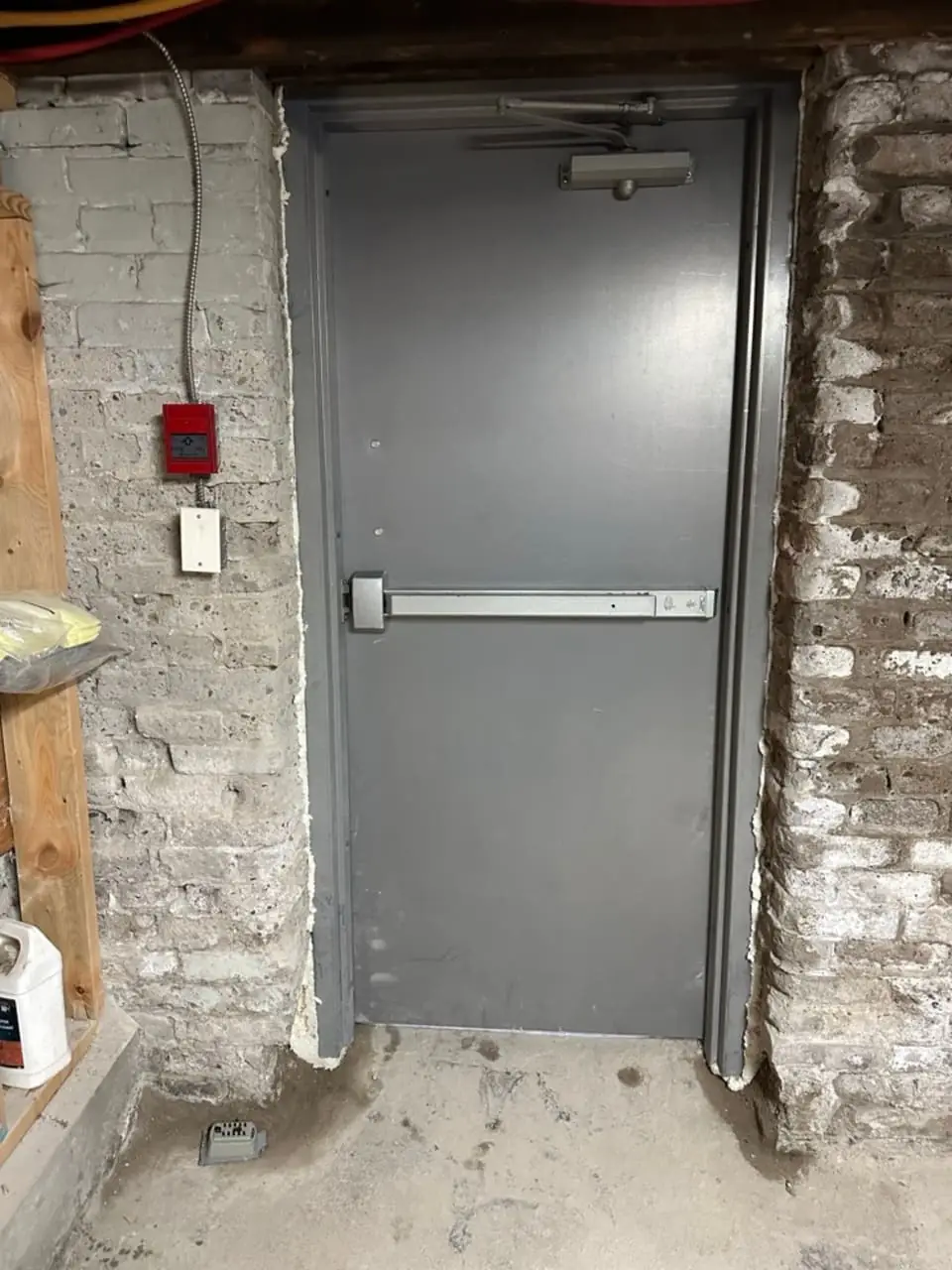
Our St. Clair West metal exit-door project, shown in this guide's cover photo, included a replacement door, panic bar and closer. Compare that complete scope with the retained-door hardware work in Brock and Toronto before assuming every entrance needs the same repair.
What to send before a visit
- A full view of the door and frame, including both leaves of a pair.
- Close-ups of the closer, hinge or pivot, lock and strike, and any rubbing mark or glass damage.
- Your location, the type of entrance and whether it can currently close, lock and be used for exit.
- A short video of normal movement only if the door can be operated safely.
Photos help us prepare; the final recommendation depends on the on-site assessment. For an entrance that cannot be secured or used safely, use our emergency commercial entrance service. For gradual wear, ask about planned maintenance.
If the door operates normally and you are planning improvements, read our four storefront security checks before choosing an upgrade. To discuss a current fault, contact DoorWin Services with the symptoms and photos.
Questions people ask
Can you repair a commercial door after hours?
Yes. DoorWin Services takes calls 24/7, and the price is the same at night and on weekends.
Do you repair aluminum storefront doors?
Yes, including hinges, pivots, closers, locks, panic hardware and glass.
Do you replace commercial doors and frames?
Yes. When repair no longer makes sense, we replace steel and aluminum doors and frames.
Send a photo and your location. We’ll respond with options and an estimated price.
Get an Estimate