Window Crank Repair
Casement and awning window crank repair and operator replacement for rusted, stripped, seized or disconnected opening hardware.
Is this the right window service?
Here is what customers usually need to know before calling or sending photos.
Use this service when
- The window crank handle turns, spins or skips but the sash barely moves or does not move at all.
- The operator arms, track or pivot points are rusted, seized, bent or disconnected.
- The window is difficult to open, will not close tightly, drops while opening or no longer reaches the lock correctly.
What DoorWin checks or does
- Inspection of the crank handle, operator body, gears, arms, track, hinges, sash alignment and lock engagement.
- Part-matching guidance for compatible casement or awning operators when replacement hardware is available.
- Installation, alignment and full-cycle testing so the sash opens, closes and locks without forcing the handle.
Crank repair, casement repair or glass replacement?
Choose window crank repair
The handle spins, jams or skips, the operator is rusted, or the casement or awning sash will not move normally.
02Choose casement and awning window service
The problem includes sash damage, hinges, seals, locks, frame movement or several failed components.
03Choose IGU replacement
The crank works but the glass is foggy, cracked or the insulated sealed unit has failed.
Does Your Window Crank Look or Behave Like This?
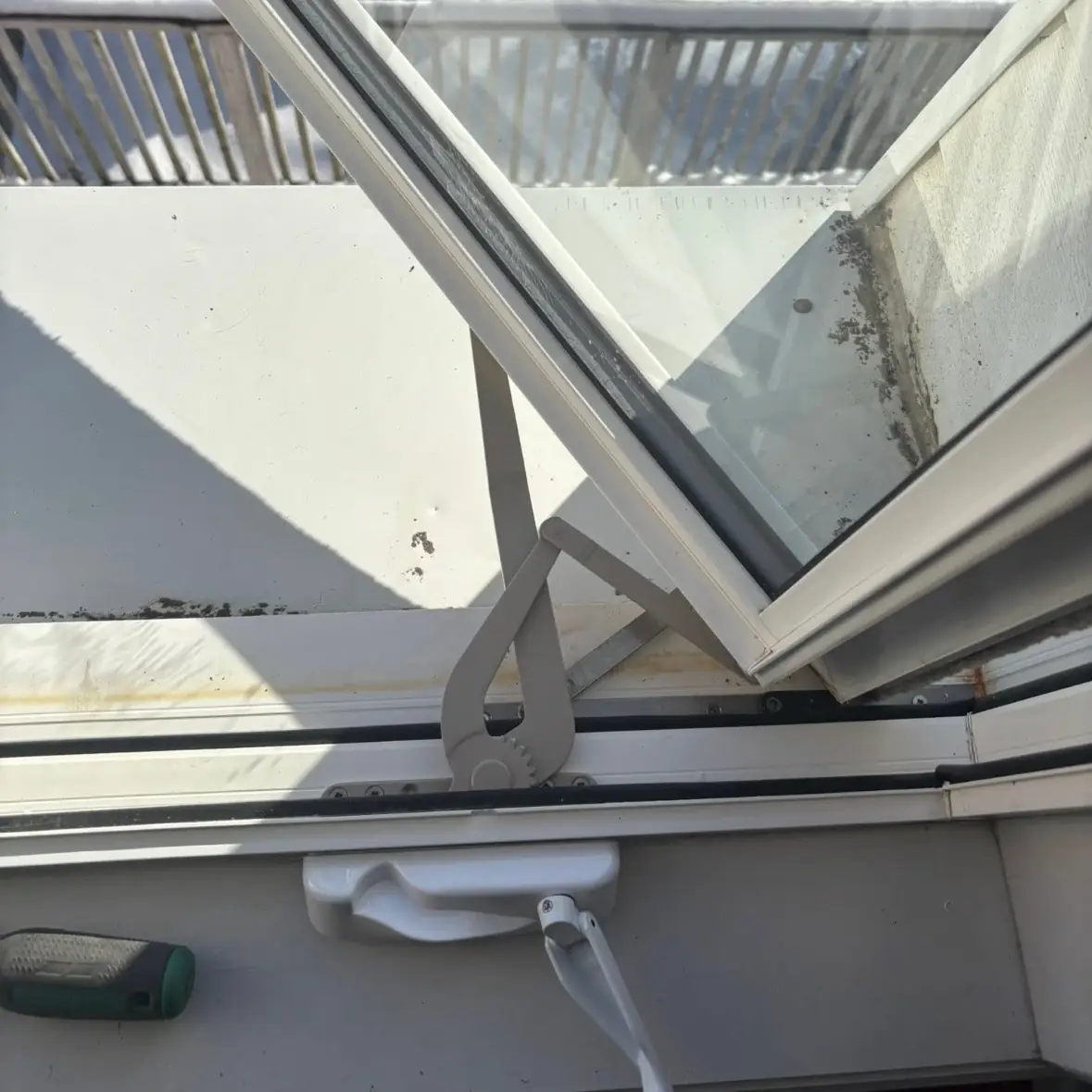
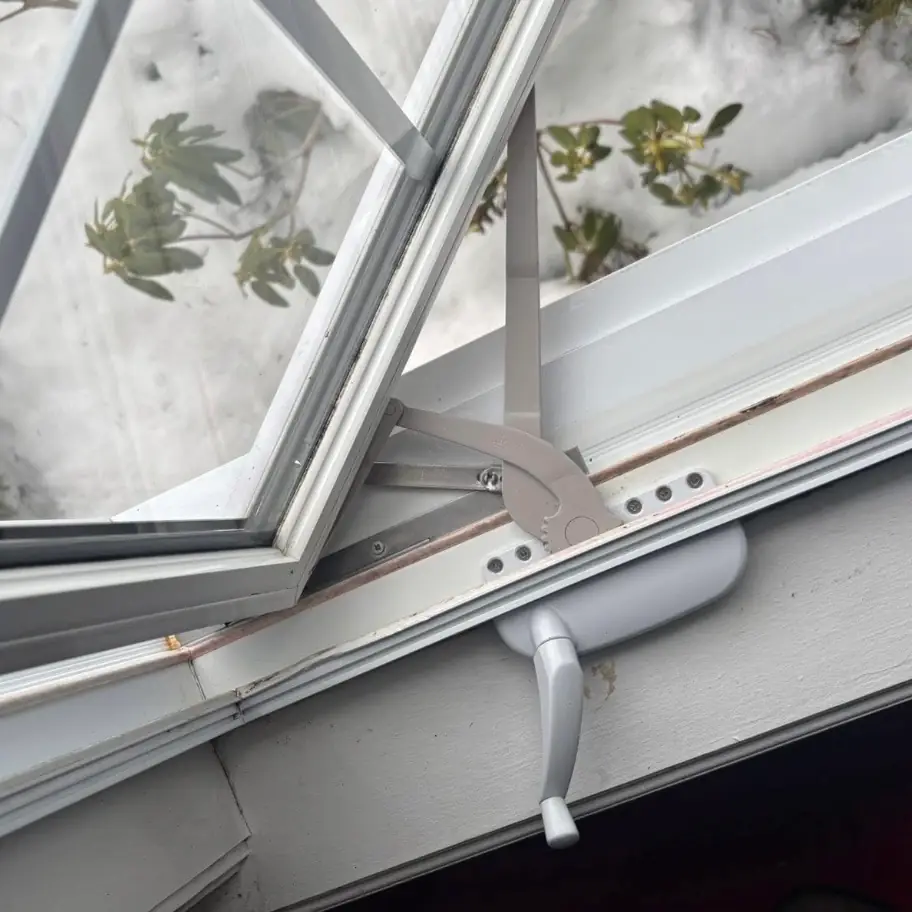
These are real examples of failed and replacement window operator hardware. They are not a single before-and-after project; they show the types of corrosion, seized movement and worn linkage DoorWin finds, followed by examples of new operator assemblies installed on serviceable casement and awning windows.
Failed and rusted hardware
Corrosion and wear can lock the arms in place, damage the operator gears and make the handle feel unusually hard, loose or ineffective.

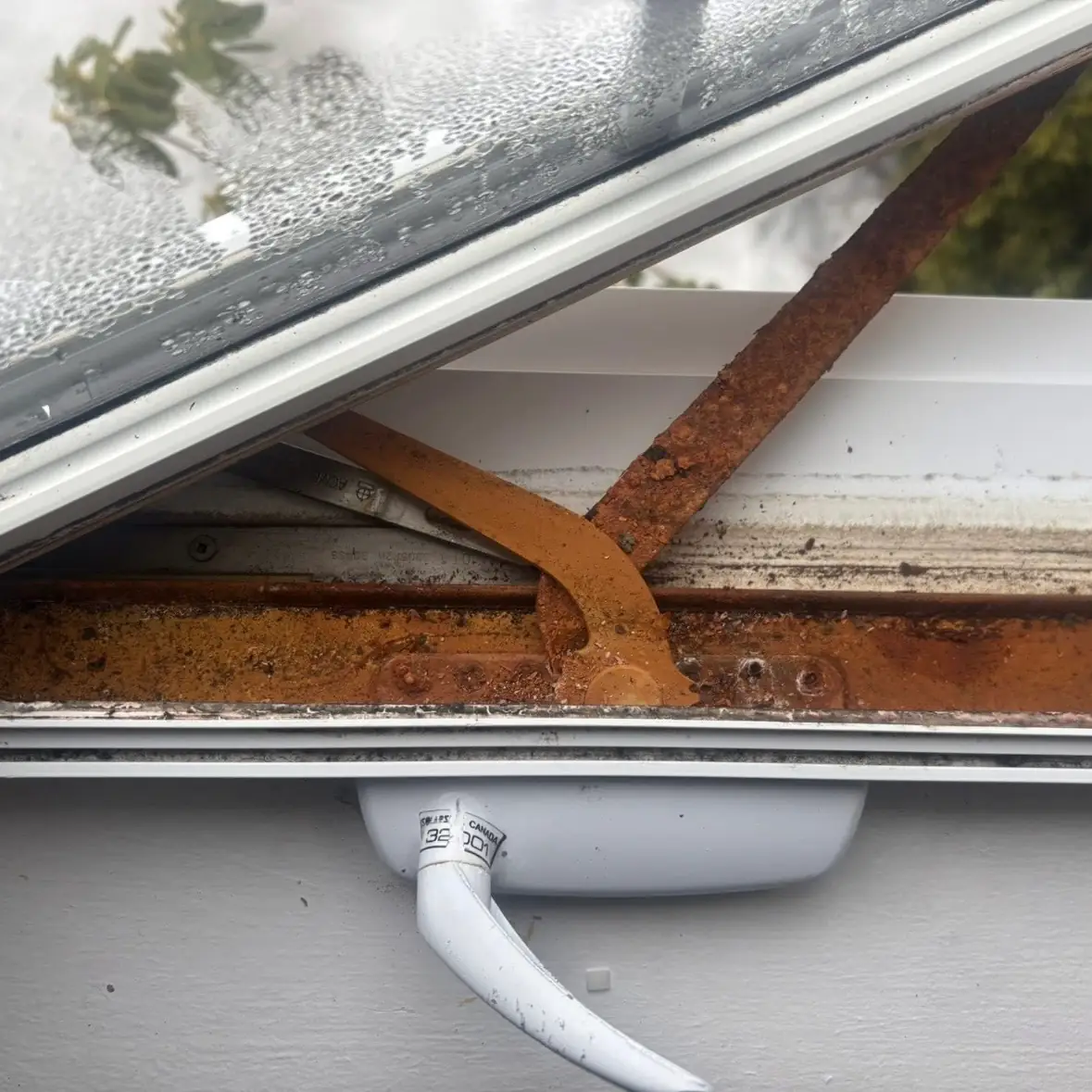
Severe corrosion around the operator track and arms
Rust has spread across the metal linkage, mounting rail and pivot points. This level of corrosion can make the sash difficult to move and can place extra load on the gears every time the handle is turned.

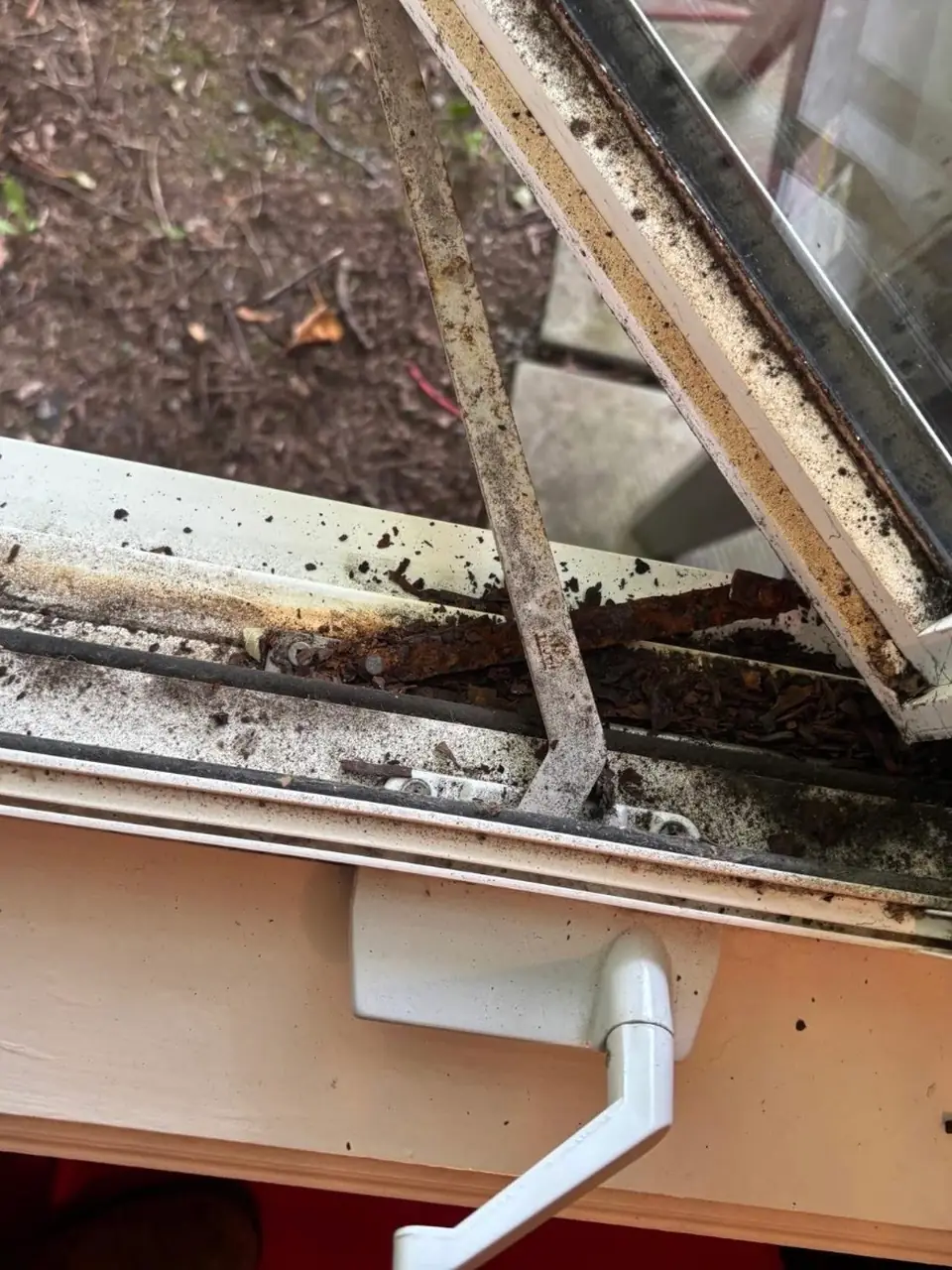
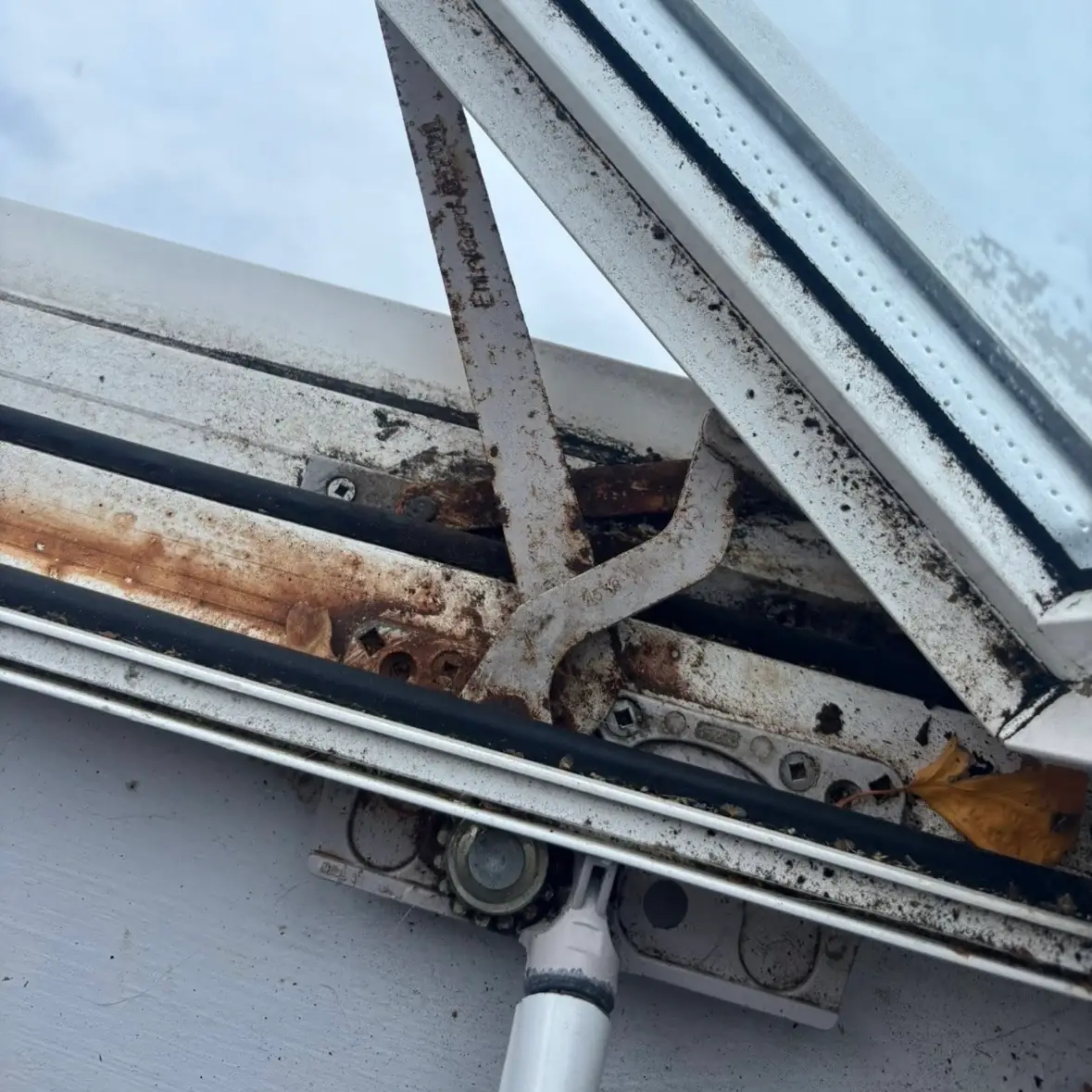
Worn operator arms and seized pivot points
The operator arms and track show heavy staining, corrosion and accumulated debris. When these joints bind, the handle may turn without moving the sash correctly or the window may stop before it fully opens.
Replacement operator hardware
A properly matched operator restores controlled movement when the sash, frame and glass remain suitable for repair.

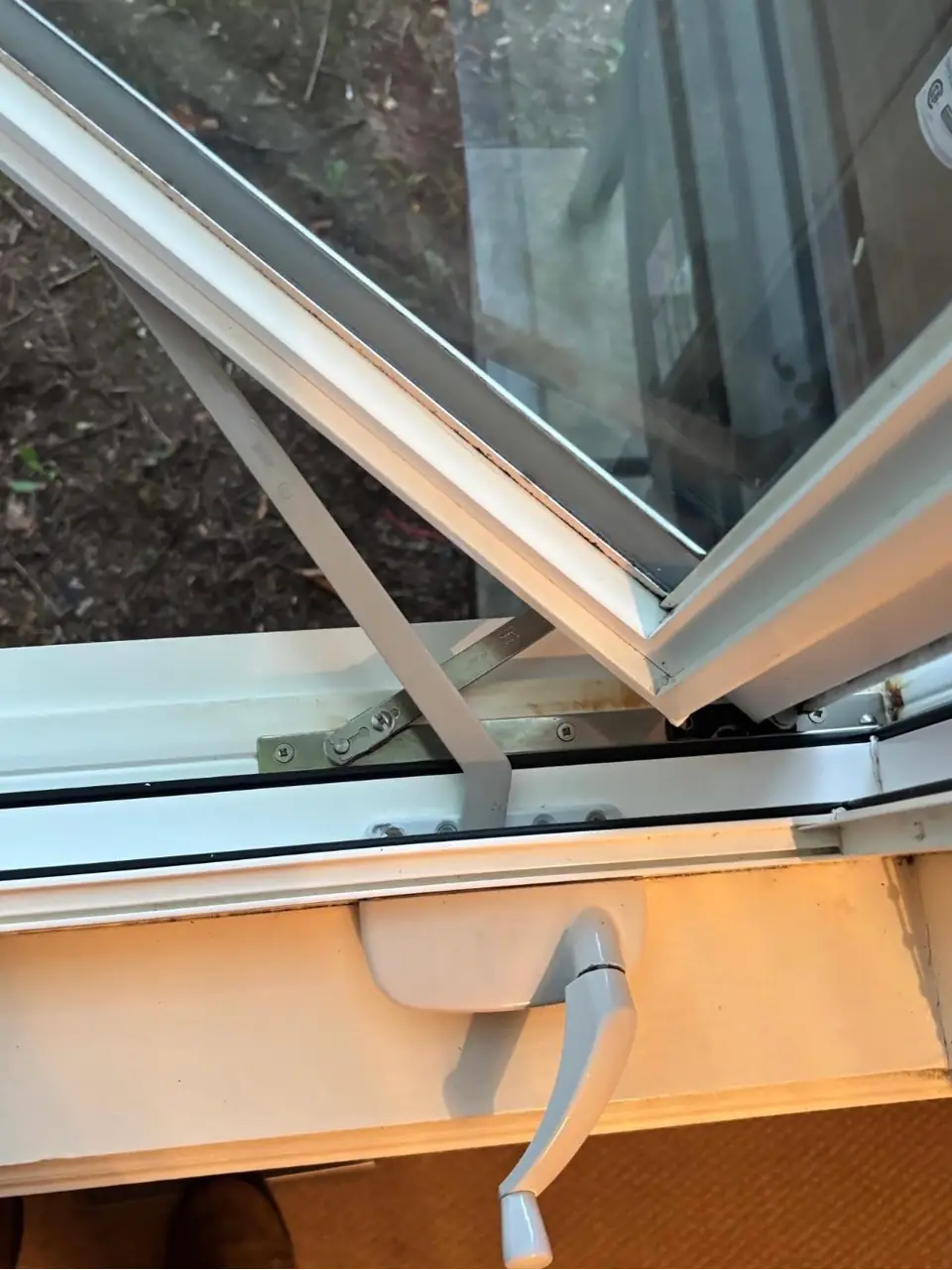
New operator and support arms fitted to the existing window
The replacement mechanism is mounted to the existing frame and connected to the sash with compatible arms and track hardware. The geometry must match so the window opens through the correct range.

Completed crank and linkage installation
The new handle, operator and linkage are in place and the sash is supported through its opening cycle. Final testing checks smooth movement, closing pressure and lock alignment.
Common signs you need window crank or operator repair
- The crank handle turns but the window does not move.
- The handle spins, slips, clicks or skips under load.
- The crank is extremely hard to turn.
- The operator arms or track are visibly rusted.
- The window opens only partway and then jams.
- The sash drops, twists or moves unevenly.
- The window will not pull closed tightly enough to lock.
- The handle or operator cover is loose or broken.
What the correct repair can restore
- Smoother opening and closing movement
- A stable sash through the full opening range
- Better closing pressure against the weatherseal
- Proper lock engagement without forcing the crank
- Use of the existing frame and sash when serviceable
- Clear identification of any hinge or sash problem beyond the operator
Window assessment workflow
Review photos of the handle, operator cover, linkage, hinge area and the full window to identify the hardware style.
Check whether the handle is stripped, the gears are worn, the operator is seized, the arms are bent or the sash is binding.
Match the replacement operator by arm geometry, handing, track, mounting pattern and compatible hardware family.
Install the approved hardware and align the linkage with the existing sash and track.
Window details that prevent wrong measurements
Send close-up photos of the handle, operator cover, arms, track and any visible part number, plus a full photo of the window. Tell us whether the crank spins, jams, skips or will not pull the sash closed.
Completed projects
See related completed projects selected for this service.
Questions about Window Crank Repair
Why does my window crank turn but the window does not open?
The handle connection or operator gears may be stripped, an arm may be disconnected, or the sash may be binding. The handle and full operator mechanism should be checked together.
Can a rusted window crank operator be replaced without replacing the window?
Often yes, when the frame, sash, hinges and glass remain serviceable and a compatible operator can be matched.
What is the difference between a window crank handle and an operator?
The handle is the part you turn. The operator is the geared mechanism and arm system that actually moves the casement or awning sash.
Why is my casement window very hard to crank open?
Rust, seized operator arms, worn gears, hinge friction or sash misalignment can all create excessive resistance. Replacing only the handle may not solve it.
How do you match a replacement window operator?
We compare the operator handing, arm geometry, track style, mounting holes, visible part numbers and window configuration to compatible hardware.
More details about Window Crank Repair
Window crank repair for casement and awning windows
Window crank repair is the right service when a casement or awning window will not open, the handle spins without moving the sash, the crank skips under load or the operator hardware is rusted and seized. The visible handle is only one part of the system. Behind it, gears, arms, tracks and pivot points transfer movement to the sash.
Window crank turns but the window does not open
If the handle turns freely but the sash stays still, the handle connection or internal operator gears may be stripped. A disconnected arm, worn pivot or jammed sash can cause a similar symptom, so the complete mechanism must be checked before ordering parts.
Rusted or seized casement and awning window operators
Condensation and moisture can corrode steel operator arms, tracks and fasteners. As rust builds, the window becomes harder to open and the extra resistance can damage gears or bend the linkage. Replacing the operator is most effective when the sash, hinges and frame are also checked for binding.
Casement window operator replacement and hardware matching
Replacement operators must match the existing window configuration. Handing, arm length, track style, mounting pattern and brand family all affect compatibility. Common hardware families include Truth Hardware, AmesburyTruth, EntryGard, Encore and Roto, although the exact match depends on the installed window.
Why the window may not close or lock after crank failure
A worn operator may stop pulling the sash firmly against the weatherseal, leaving the lock difficult to engage. Hinge wear or sash misalignment can create the same issue. DoorWin tests closing pressure and lock alignment after the new hardware is installed.
When window crank repair can avoid full window replacement
If the frame, sash and glass remain serviceable, replacing the crank operator can restore use without changing the complete window. Full replacement is considered separately when the frame is damaged, the sash is badly warped or several major components have failed.
Toronto & GTA service coverage
Send photos of the window, not just the broken part
Send close-up photos of the handle, operator cover, arms, track and any visible part number, plus a full photo of the window. Tell us whether the crank spins, jams, skips or will not pull the sash closed.